To maintain our resilience and secure future prosperity, Europe and the Netherlands must invest in what fundamentally enables growth: a competitive regulatory environment, modern infrastructure, and above all knowledge and talent.
The recently published Wennink Report clearly recognises this urgency. No fewer than four of its 29 recommendations focus explicitly on talent: demanding excellence in education, attracting international talent, prioritising STEM programmes, and embedding upskilling and reskilling structurally in the labour market. From the perspective of the ChipNL Competence Centre, these recommendations strongly resonate with both our mission and our daily work.
The good news is that the Netherlands is not starting from scratch on these topics. Large-scale talent initiatives such as Techkwadraat, PhotonDelta, Quantum Delta NL, the National Plan Microchip Talent (Beethoven) and the ChipNL Competence Centre are already actively contributing to the implementation of these recommendations. A broad coalition is already working hard on this challenge.
Today, more than 25 national and European programmes are addressing different aspects of the technology and semiconductor talent pipeline. These initiatives cover the full spectrum: lifelong learning, adaptations to MBO, HBO and university curricula, reskilling and upskilling of the existing workforce, research capacity, and the attraction of international talent.


Together, these programmes represent an estimated investment of over €1 billion in the coming years, with the potential to educate and retrain 40,000 to 50,000 people by 2030. From the perspective of the ChipNL Competence Centre, this forms a strong and necessary foundation for long-term growth.
There is also still work to be done. Many programmes remain fragmented or partially overlapping, reducing their overall effectiveness. Moreover, awareness of these initiatives among the general public, including students, parents and career switchers, is still limited.
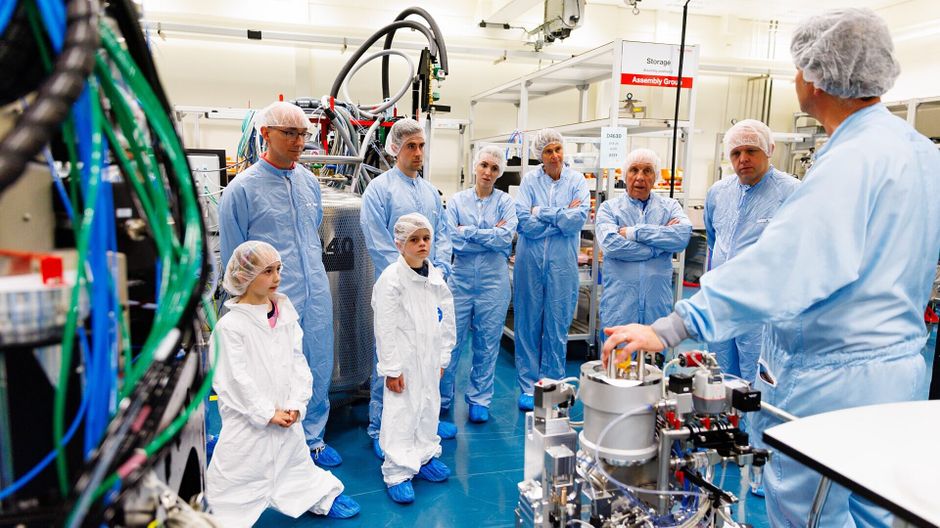
Perhaps the most underestimated factor lies outside formal policy frameworks. Parents play a decisive role in educational and career choices. Encouraging children to explore technology and engineering is crucial. Parents are often the strongest source of inspiration, or unintentionally a barrier, when technology is unfamiliar or perceived as inaccessible. Without early exposure and positive examples, technical careers remain invisible to too many young people.
The foundation of our economy is people: their hard work, their talent, and their skills. Competitiveness today is less about labor costs and more about the knowledge of employees.
At the same time, it must be emphasised that even the most well-designed semiconductor talent programmes cannot succeed in isolation. As highlighted in the Wennink Report, broader structural challenges must be addressed in parallel. Issues such as housing shortages, immigration policy, regulatory complexity and environmental constraints directly affect the success of talent development. For example, Eindhoven University of Technology could have enrolled nearly 500 additional bachelor students this academic year, were it not for the severe shortage of student housing. Without policy changes, this problem is expected to worsen, not only in Eindhoven but nationwide.
The current policy on, and investments in, Dutch talent are insufficiently effective, due in part to a lack of clear direction and coordination.
International STEM talent also remains essential and irreplaceable for the Dutch economy. With an ageing demographic, the Netherlands cannot train enough engineers domestically to meet the rapidly growing demands of the semiconductor sector. This requires a stable, predictable and welcoming policy environment that makes the country attractive to study, work and build a future. Measures such as the Internationalization in Balance Act and budget cuts to higher education are counterproductive in this context and should be carefully reassessed.
Finally, faster and more flexible government regulation for the development, implementation and execution of technology talent programmes such as Beethoven is critical. While the ambition is clearly there, overly complex regulatory processes often slow down implementation. By focusing too heavily on procedures rather than outcomes, we risk missing our core objective: rapidly scaling the technology talent pool at the pace required to remain internationally competitive.
Other countries are moving fast. We must do the same. Netherlands must join them.
Author
Nick Hol | Project Leader Semicon Talent Development
Learn more about talent development within ChipNL CC?
Read here how the ChipNL Competence Centre contributes to strengthening the semiconductor talent chain in the Netherlands and Europe.