The global demand for chips is rising explosively and will even double towards 2030. Europe wants to reduce dependence on Asia and the United States and is therefore investing heavily in its own semiconductor sector. In this context, the ChipNL Competence Centre was launched in October 2025: a one-stop-shop that supports Dutch companies, researchers, and educational institutions in innovation, scaling up, and collaboration in semiconductor technology.
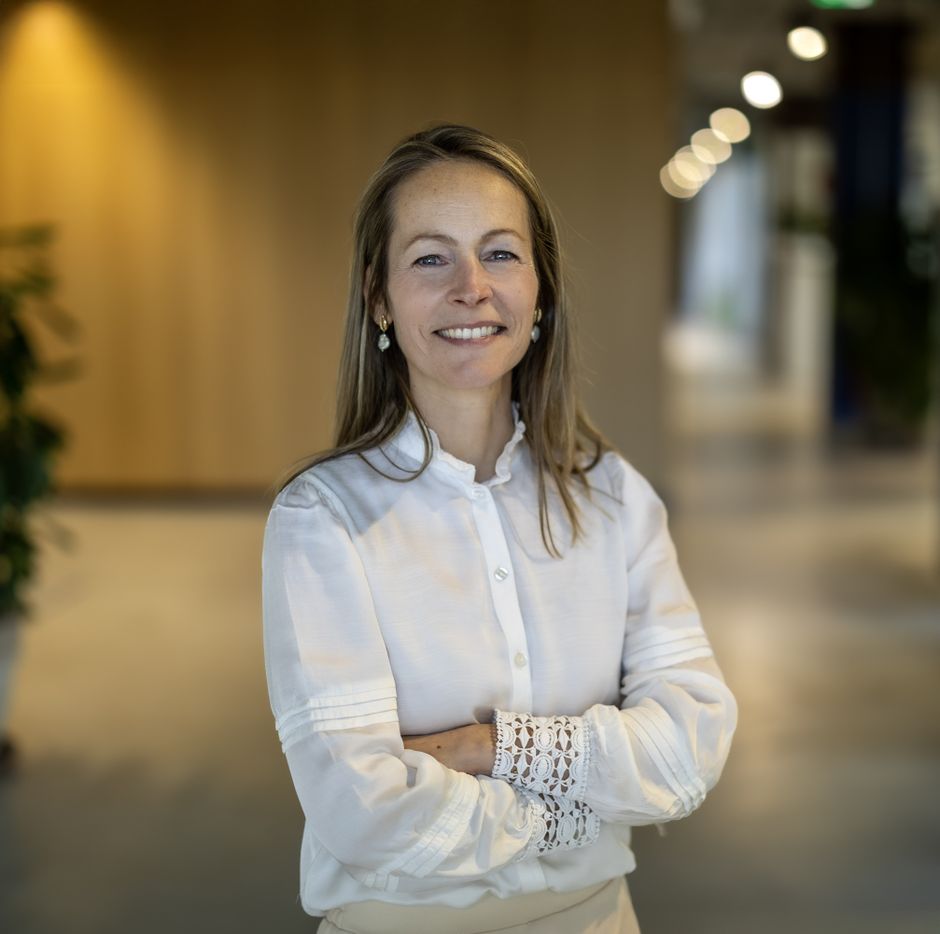
Managing Director Elly Zwartkruis sees the center as an essential link in strengthening both the Netherlands and Europe, seamlessly aligning with the ambitions of the European Chips Act. "The ChipNL Competence Centre is one of the 30 competence centers in Europe, forming a large network to jointly promote chip innovation. We are a network organization that helps entrepreneurs accelerate in the field of semiconductor technology," she says. "We do this with technical expertise, access to the Chips Design Platform, the EU pilot lines, business development, talent development, and internationalization."
One-stop shop, nationwide reach
Although Zwartkruis's location is Eindhoven, the center explicitly works nationwide.
"All semiconductor regions in the Netherlands are connected. From Delft and Twente to Eindhoven and thus also the Lifeport region. Our center lowers the barriers for startups and smaller companies. The ChipNL Competence Centre provides them with direct access to leading European infrastructures, such as pilot lines and the EU Chips Design Platform. They can also make use of the available facilities and initiatives in the Netherlands."
Tailored guidance
For many SMEs, their own cleanroom or million-dollar lab is unattainable. The ChipNL Competence Centre helps them gain access to advanced facilities and guides them throughout the entire innovation process: "We look very precisely at what question an entrepreneur has and which pilot line or expertise best suits it," says Zwartkruis. "Entrepreneurs are not only referred but truly guided."
In addition to technical support, there is help for the complex matter of subsidies and funds. “We do not offer financing ourselves, but we guide companies through the landscape of European, national, and regional subsidy and financing opportunities. Especially for SMEs, this overview of financing instruments is essential. This support is completely free thanks to contributions from the European Commission and the Ministry of Economic Affairs and Climate.”
Talent development
The growing demand for chips goes hand in hand with an almost explosive demand for technical talent. The Netherlands is working through the national Project Beethoven to achieve the ambition of training 38,000 new technicians.
“New minors, field labs, cleanrooms, and practical programs are being introduced,” says Zwartkruis. “We connect all these initiatives with the specific needs of companies. We do this for MBO, HBO, university, and professionals who want to retrain or upskill. Talent matchmaking events are an important tool to bring supply and demand together, both for students and for people considering a career change.”
Medtech opportunities in the region
Especially in the Lifeport Region Arnhem Nijmegen and in Wageningen, there are many opportunities due to the convergence of strong expertise fields: on one hand chip design, packaging, and production technology; on the other hand a powerful medtech ecosystem with universities, hospitals, and research institutions.
“Energy-efficient, efficient chips are becoming increasingly important for medical applications and drug development,” explains Zwartkruis. “We want to actively bring together parties from the tech and medical domains, especially when they do not yet automatically know how to find each other.”
Photonics
The ChipNL Competence Center sees photonics as a key technology in which the Netherlands is already strong and where there are great future opportunities. “Photonic chips are energy-efficient and can mean a lot for sectors such as healthcare, sensor technology, and communications,” says Zwartkruis. “Our center stimulates innovations and initiates collaborations in this area through targeted workshops, trade shows, and pilot line visits.”
Indispensability in the chain
The ChipNL Competence Center looks at the broader position of the Netherlands within the European ecosystem and in the international value chain. Zwartkruis sees opportunities to strengthen the role of the Netherlands, which is now often a supplier. “It’s about your indispensability in the chain,” she explains. “Where is your strength, to what extent does the rest of the value chain depend on your products or services? The Netherlands has a strong position and is working on new innovations to further anchor this position in the future.”
The center helps companies with scaling up, finding new markets, and future-proofing their technology.
Societal challenges
Elly Zwartkruis: “With my background in economic psychology and technology, I like to pioneer in innovation. Especially in the semiconductor industry, I see the key to our societal challenges. It is a wonderful role to make leading knowledge accessible to Dutch and European businesses in collaboration with various parties.”
“We hope to become the hub of the Dutch semiconductor industry within a year, where companies come together to accelerate innovation and expand our international position.”
Bron: https://lifeport.nl