What if you could design a computer chip by playing a game? With OHMIC, pupils and students discover how chip design works. They build electronic circuits, turn them into a chip layout and can even have their design produced. This makes a complex field accessible to new chip talent in the Netherlands.
Chip talent starts with a low threshold
Chips are in phones, cars and medical equipment. Yet few people know how a chip is designed. Getting started usually takes a lot of knowledge of electronics and physics. That threshold puts new talent off, while the chip sector is looking for more and more people who can develop new technology.
That is why OHMIC does not start with theory, but with trying things out. Players discover along the way how creative chip design can be.
Building a nanometre city
In OHMIC, players get assignments to create electronic circuits. They try out solutions and see straight away what works and what can be improved. Scores, hints and leaderboards keep it challenging.
Next, players turn their circuit into the layout of a chip. In a 3D world they place transistors and lay connections, a bit like building in Minecraft or SimCity. The result is a tiny electronic city: a nanometre city.
Real design rules, a real chip
Behind the game world sits real engineering. Designs must meet technical design rules and are tested with simulations. The game uses freely available design tools that match the way professionals work.
Through initiatives such as Tiny Tapeout, a simple design can eventually be produced as a real chip. You start with an assignment on your screen and later hold a chip you designed yourself.
For pupils, students and teachers
OHMIC is being developed for different ages and levels of education. The developers are exploring how the game fits secondary education, universities and younger audiences. Teachers can choose assignments, set conditions and decide which components are available. This makes OHMIC suitable for a short workshop as well as a longer course.
Collaboration in the Netherlands and Europe
OHMIC is the result of a collaboration between the University of Twente, Eindhoven University of Technology, Delft University of Technology, the University of Amsterdam and game studio Enversed Studios. Researchers and teachers bring knowledge of electronics and education. The game studio knows how to create an environment that invites you to keep playing.
OHMIC is part of the European project proposal ODE4EC-CES (Open Design Environment for European Chips: Chips for Every Student), submitted to the Chips Joint Undertaking. The proposal aims to make chip design more accessible to pupils and students across Europe.
When can you play OHMIC?
OHMIC is in its development and testing phase. The first internal test versions became available in 2026. The goal is to make the game widely and freely available; no date has been set yet. Feedback from students, teachers and testers helps the makers improve the game.
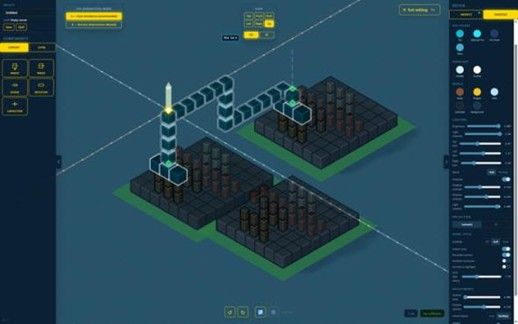
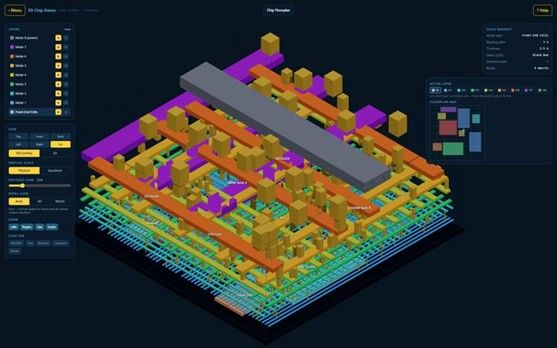
3D view of a chip layout in OHMIC with colored metal layers and transistors and a Game screen of OHMIC where a player connects blocks into a circuit
Role of ChipNL CC
ChipNL Competence Centre (ChipNL CC) is the Dutch Chips Competence Centre under the EU Chips Act and helps startups, SMEs and knowledge institutions with talent development and skills. ChipNL CC is involved in the development of OHMIC and coordinates the project collaboration between the partners. Together with them, ChipNL CC is exploring where the game can be used and how OHMIC can grow further, in the Netherlands and Europe.
Read more about our work on chip talent on the Talent & Skills page. Would you like to know more about OHMIC, or use the game in your teaching? Get in touch with ChipNL CC.